

The Six Sigma Black Belt is a widely recognized advanced certification that combines superior leadership skills with technical knowledge. High in the Six Sigma hierarchy, it represents the capacity to lead organizational transformation, oversee complex projects, and produce results that can be measured. In addition to being process improvement specialists, Black Belts are leaders and mentors who help others achieve business excellence. This certification gives people a significant edge in a competitive global marketplace, helping them stand out and pave the way for long-term success in quality and process management as well as professional progression and recognition.
Table of Contents
What is Six Sigma and Lean Six Sigma?
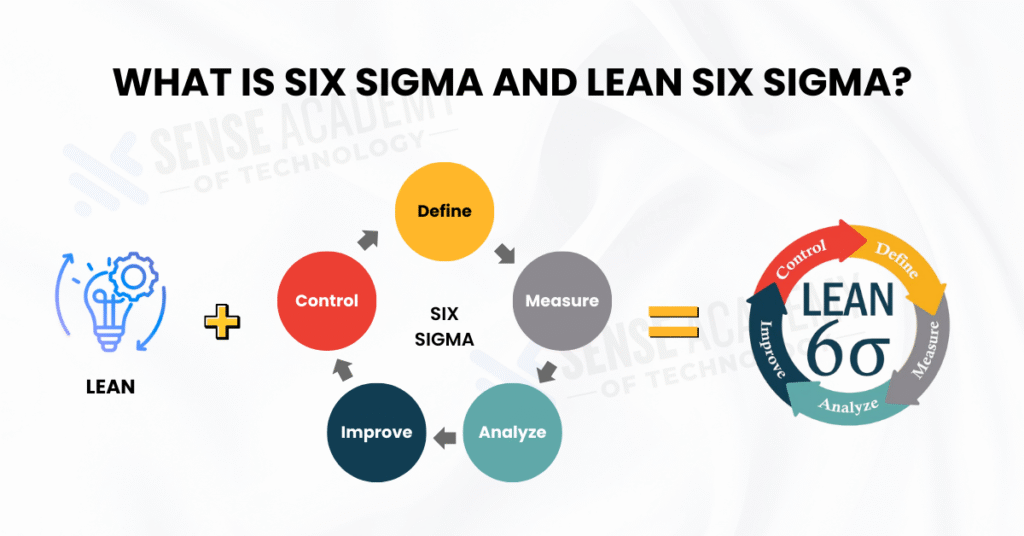
It is necessary to first understand what Six Sigma is in order to understand the significance of the Black Belt. Six Sigma is a data-driven methodology focusing on process efficiency, variation management, and mistake reduction. The DMAIC framework—Define, Measure, Analyze, Improve, and Control—is used to identify issues, maximize improvements, and maintain progress. Six Sigma, which was created by Motorola and made popular by General Electric, is now a worldwide benchmark for excellence that is applied in a variety of sectors, including manufacturing, healthcare, finance, and information technology. The advanced techniques and abilities required of a Six Sigma Black Belt are based on this concept.
Lean Six Sigma combines the data-driven, process-improvement focus in Six Sigma with the waste-reduction concepts of Lean. Lean focuses on removing non-value-added tasks and increasing workflow efficiency, whereas Six Sigma stresses lowering variation and enhancing quality. Lean Six Sigma allows businesses to simultaneously achieve cost reductions, improved output quality, and quicker operations by integrating these strategies. Lean Six Sigma-trained Black Belts are capable of locating inefficiencies, streamlining processes, and putting long-lasting enhancements into various areas. Lean Six Sigma is a powerful methodology for attaining operational excellence and producing measurable business advantages because of its dual approach.
Role and Responsibilities of a Black Belt
A Six Sigma Black Belt oversees major projects that call for advanced problem-solving and leadership abilities. Setting project objectives, evaluating information, identifying process flaws, and getting solutions in place to boost productivity are some of their duties. Black Belts manage cross-functional teams, guaranteeing cooperation, responsibility, and alignment with company goals. Additionally, they mentor Yellow Belts and Green Belts, assisting in their skill development and promoting a continuous improvement mentality. Black Belts boost operational performance, create long-lasting improvements, and contribute significantly to long-term corporate success in a variety of industries by combining technical know-how with strategic leadership.
Skills Developed with Black Belt Certification

A Six Sigma professionals holding a Black Belt qualification are better prepared to spearhead challenging process improvement projects. Black Belts become proficient in problem-solving techniques, data-driven decision-making, and statistical analysis. They become experts at using methods like process mapping, regression analysis, and hypothesis testing to find inefficiencies and produce measurable results. Since Black Belts frequently oversee cross-functional teams and mentor Green Belts, leadership and project management abilities are particularly essential. They facilitate the adoption of improvements by having excellent communication and change management skills. In the end, Black Belt specialists turn into strategic assets with the ability to reduce costs, raise quality, and promote organizational expansion.
Career Avancements and Leadership Opportunities
The Six Sigma Black Belt certification hires professionals for leadership and senior-level positions and is a strong career advancement booster. Black Belts are valued by organizations because of their capacity to promote transformation, lead process improvement, and produce measurable company outcomes. This certification emphasizes strong leadership, communication, and problem-solving abilities in addition to technical proficiency. Project managers, operations directors, and quality directors are among the positions that frequently consider Black Belts. The certification is a genuine career differentiator across industries since it creates long-term reputation and professional recognition in addition to advancements. Professionals can use it to distinguish themselves as significant changers.
Industry Demand for Black Belt Professionals

Six Sigma Black Belts are becoming more and more important as businesses look to include process improvement into their overall business plan. In the current competitive landscape, businesses require leaders who can link improvements to long-term objectives in addition to operational efficiency. This demand has been further increased by the arrival of digital transformation, the adoption of Lean-Agile principles, and the increasing complexity of global company operations. Black Belt professionals offer a unique combination of strategic leadership, problem-solving, and advanced data analytics that helps businesses maximize performance, cut expenses, and provide long-term value in quickly shifting market conditions.
Salary and Career Growth Outlook
It is commonly known that earning a Six Sigma Black Belt can lead to significant advancement in career and earnings potential. Because certified professionals provide quantifiable value through leadership and process improvements, they frequently receive more salary than their non-certified colleagues. Although pay varies by nation and sector, Black Belt holders regularly receive competitive pay. Beyond compensation, the certificate offers a variety of professional options and speeds up advancement into executive, consulting, and leadership jobs. The Black Belt certification continues to be one of the most effective investments for career success and organizational contribution for individuals looking for both recognition and long-term progress.
How to prepare for Black Belt Certification?

It takes dedication, hands-on training, and structured learning to prepare for Six Sigma Black Belt certification. Start with a solid understanding of Six Sigma principles, ideally following Green Belt instruction. Enroll in reputable programs that provide practical project work, simulations, and real-world case studies. Develop your skills by using essential techniques like statistical analysis, process mapping, and DMAIC. Use these strategies in projects at work to improve your decision-making and leadership abilities. Exam preparation can be improved by study aids, group discussions, and practice exams. Enhance your knowledge and confidence for certification success by strengthening your exam readiness with study materials, practice exams, and group discussions.
Achieve your Six Sigma Black Belt with SenseAcademy.
An organized route to Six Sigma Black Belt certification is offered by Sense Academy, which combines expert-led instruction, real-world case studies, and practical projects for learning. Students master Six Sigma techniques, such as DMAIC, process enhancement, and leadership. Building on Green Belt knowledge, using tools in work-related tasks, and improving statistical analysis, process mapping, and decision-making skills are all part of effective preparation. Exam preparation is improved through frequent evaluations, practice exams, and mentoring sessions. Sense Academy ensures job advancement across industries by preparing students to succeed in leadership roles in addition to obtaining certifications.
Conclusion
Professionals that obtain a Six Sigma Black Belt certification have the skills to mentor teams, lead process improvement initiatives, and provide measurable results inside businesses. Black Belts are useful assets in a variety of businesses since the qualification promotes the development of both technical and strategic leadership abilities. Certified professionals benefit from a competitive edge, career advancement, and senior management prospects due to the growing demand for process improvement skills. Programs like Sense Academy guarantee preparation for certification and real-world application through structured learning, hands-on projects, and test preparation. In the end, earning a Black Belt certification opens the door to sustained career success and organizational impact.
FAQ’s
What differentiates a Six Sigma Black Belt from a Green Belt?
In their functional domains, Green Belts mostly assist Six Sigma projects. They concentrate on smaller-scale projects and use process improvement technologies under the direction of Black Belts. Black Belts, on the other hand, oversee high-impact initiatives throughout the company, fully handling goal-setting, data analysis, solution implementation, and outcome measurement. In order to ensure knowledge transfer and team performance, they also mentor Green and Yellow Belts. In order to make major operational changes and strategically contribute to long-term business growth and organizational excellence, Black Belts acquire advanced leadership, project management, and statistical analysis abilities.
What role does project experience play in earning a Black Belt certification?
Due to the role’s focus on the actual implementation of Six Sigma techniques, project experience is essential for Black Belt certification. Applicants must show that they can oversee projects, spot inefficiencies in processes, put solutions in place, and track outcomes. Practical experience guarantees that students can successfully implement DMAIC frameworks, statistical tools, and process improvement strategies. Documented project work is a requirement for many certification programs’ evaluation procedures. Additionally, hands-on experience fosters leadership, problem-solving, and mentoring abilities, which enable Black Belts to effectively lead teams and drive organizational advancements. Candidates who lack practical project experience could find it difficult to convert theory into tangible business outcomes.
What are the ways that Black Belts apply Lean Six Sigma in their companies?
In order to implement Lean Six Sigma, Black Belts analyze processes, find inefficiencies, and use DMAIC when combined with Lean tools like 5S and value stream mapping. They oversee projects, coordinate cross-functional teams, and make sure improvements support the company’s goals. Black Belts improve quality, cut expenses, and speed up workflows by fusing statistical analysis with waste reduction techniques. In order to maintain process improvements, establish standard operating procedures, and promote a continuous improvement culture, they also mentor team members. To achieve measurable organizational value, implementation calls for strong leadership, data-driven decision-making, and strategic planning.
Is it possible for a Black Belt to advance into executive positions?
Indeed, Six Sigma Black Belts are in a good position to advance into senior management and executive positions. Professionals with the certification are better able to solve problems, think strategically, lead, and manage projects. Black Belts are capable of mentoring teams, leading significant process improvement projects, and putting long-term operational plans into action that provide measurable results. They are useful for roles like Operations Director, Quality Director, or Process Improvement Manager because of their proficiency in coordinating projects with corporate objectives. In a variety of industries, Black Belts are excellent candidates for executive-level positions due to their capacity to promote effectiveness, quality, and organizational change.